What Happened to ‘Build, Baby, Build’? Carney is all Rhetoric, No Results
| By Dan McTeagueThis article originally appeared in the Western Standard.
Last week, Twitter/X was all aflutter about a Globe and Mail article called, “How Canada Became Poorer Than Alabama.” It discusses the fact that the state of Alabama, which too many of us associate with poverty and backwardness, has overtaken Canada in per capita GDP.
The most common reaction to this story seemed to have been sheer puzzlement: “How on earth could this happen?”
Well, the short answer is that the State did everything it could to attract investment, jobs, and talent, while keeping taxes low to make Alabama as affordable a place to live as possible.
To which all Canadians should respond, “Wouldn’t that be nice?!” Our government seems more concerned with virtue signalling about climate than about making Canada an easier place to get a job, build a business, and raise a family.
One specific explanation for Alabama’s attractiveness jumped out at me, though: “When companies invested in Alabama, they could receive permits and begin construction quickly. Red tape was for suckers.”
That about sums up why Alabama is on the up, and Canada is losing ground.
Take, for instance, our desperate need for new and expanded pipeline infrastructure. Oil and gas is the backbone of our economy, but our ability to get it to market is constrained by our insufficient pipeline network. That makes it difficult to use our hydrocarbons to fuel Canada, it restricts the amount we can sell to the U.S., and it makes it nearly impossible to sell anywhere else.
A new pipeline from Alberta to tidewater would enable us to open up Asian markets and shore up federal revenues, while creating thousands of jobs. It would also be a boon for national unity, making confederation work for discontented Albertans who are tempted to think their province might be better off going it alone. It’s a no-brainer. Yet months after the Carney/Smith Memorandum of Understanding promised one, there has been zero visible movement.
Well, except for earlier this month, when Enbridge CEO Greg Ebel told investors that his company has no interest in financing the proposed pipeline.
And who could blame Enbridge? After losing roughly $600 million on the cancelled Northern Gateway, the company is not about to risk another dime of shareholders’ money on a project that could be halted by protests, lawsuits, or overweening regulators before a drop of fuel passes through it.
Or, in Ebel’s words, “I don’t think investors or the infrastructure companies should be taking on the risk of development in jurisdictions that have historically created a challenge.”
Barring any real assurance that the project is going to move forward, and that the government will have their back in a tough spot, the MOU pipeline project – which I was skeptical of from the first – is simply a bad investment.
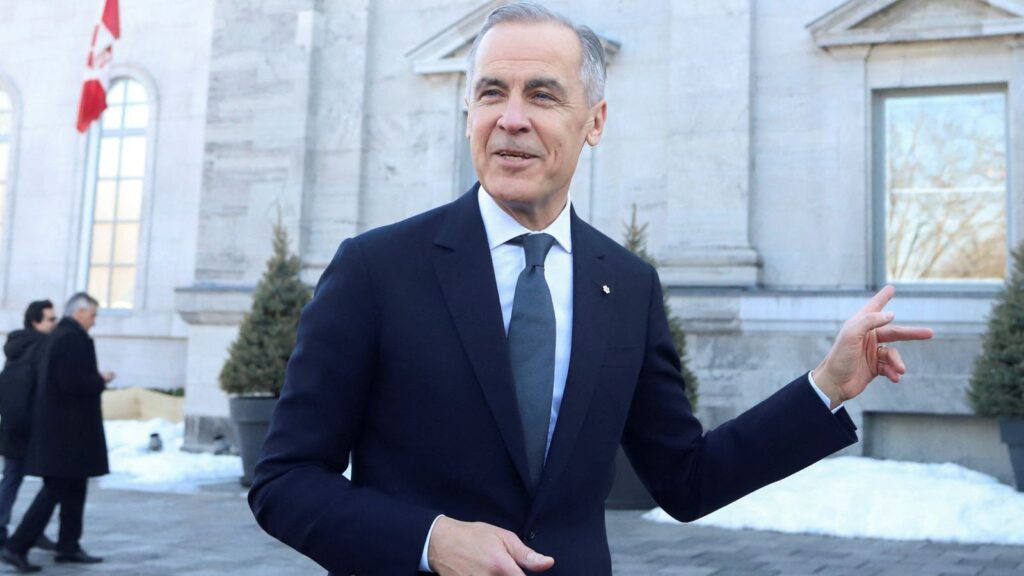
Meanwhile, Mark Carney’s Major Projects Office – the centrepiece of his “build, baby, build” campaign rhetoric – has referred just a handful of projects for review. None have received the full “national interest” designation that actually clears the way for shovels in the ground. The Alberta pipeline itself won’t even be submitted to the MPO until July, at the earliest.
Remember when Carney promised to “invest in nation-building infrastructure on a scale not seen in generations?” And to use “the emergency powers of the federal government to accelerate the major projects that we need in order to build this economy and take on the Americans?” So much for that!
There’s rhetoric, and there are results.
If the Prime Minister truly wanted these projects to move forward, he would slash red tape permanently, repeal (not merely ‘waive on a project-by-project basis’) each of: Bill C-69, the “No More Pipelines” Act; Bill C-48, the “Oil Tanker Moratorium” Act; Bill C-59, which restricts the ability of companies to tout the environmental positives of their work if it doesn’t conform to a vague government-approved standard; and a host of other legislation which restricts the operation of fossil fuel companies, and adjacent businesses.
These are challenging times, economically. This past year saw the slowest annual growth for Canada since 2020, the height of the pandemic. In this climate, Mark Carney should be bending over backwards to signal that Canada is open for business.
Instead, he’s bending over backwards to appeal to China, while consciously alienating our biggest customer, the United States, in the lead-up to CUSMA renegotiations.
Current polling suggests that the public isn’t holding this against him, at least not yet, because Canadians see him as a steady hand at the wheel. But he reads to me like the activist he’s always been, doubling down on policies and attitudes which have gotten us into our present mess.
I said before that Canadians associate Alabama with poverty and backwardness. But the Globe and Mail piece makes clear that this idea isn’t so much incorrect as out-of-date. The state was a basket case for a long time, reaching a low point in the 1980s. But the really inspiring part of that story is that instead of ignoring it, they looked the problem right in the face and turned things around.
Canadians should learn from that story. Here’s hoping we do, before it’s too late.
Recent Posts
-
WATCH: Chinese EVs have no place in Canada
February 26, 2026 -
WATCH: Focus on energy, not impossible net-zero goals
February 24, 2026 -
WATCH: Thinking about buying a Chinese EV? Think again.
February 22, 2026 -
WATCH: Are Chinese EVs driving into Canada’s national security blind spot?
February 19, 2026 -
Doug Ford’s net-zero fantasy costs Ontarians billions in electricity subsidies
February 12, 2026