
Powering Prosperity: Why Canada Must Expand Its Energy Exports
| By Dan McTeagueThese comments were brought before the Natural Resources Committee on February 3rd, where Dan McTeague appeared as an expert witness.
In 2024, total Canadian energy exports reached $208.2 billion, accounting for 29% of all Canadian goods exported. In fact, natural resources are the only sector in which Canada has a
trade surplus.
Oil and gas exports alone totaled $188 billion in 2024, 94% of that to the U.S.
In fact, overall, 89% of energy exports by value – roughly $184 billion – go to the U.S. annually.
Canada supplies about 60% of U.S. crude imports and nearly 100% of American natural gas imports.
And that’s a good thing for both sides! It provides jobs, economic vitality, and – by stimulating the domestic energy industry – affordable energy on our side of the border as well as theirs.
Which doesn’t mean we shouldn’t be looking for other markets to exploit. The more oil and gas we export, the stronger the economy will be here at home.
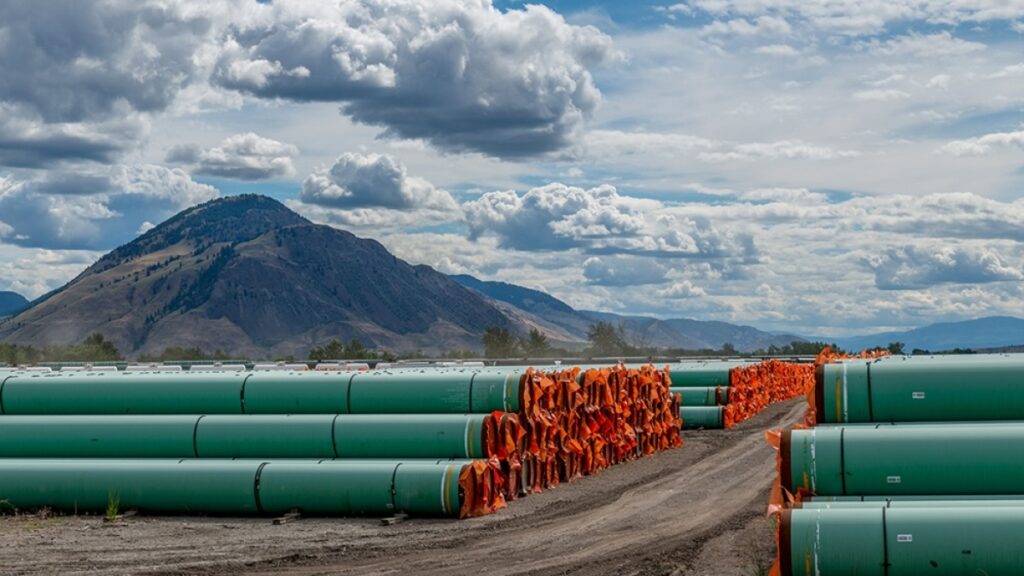
The major limiting factor here is infrastructure.
We have recently seen some positive developments on this score – in 2025, our first large-scale liquefied natural gas (LNG) export facility went online in Kitimat, B.C., enabling us to begin transporting material volumes of LNG to other markets, especially South Korea, Japan, and China.
And the Trans Mountain Expansion, completed in 2024, has provided some tidewater access from Alberta to the Port of Vancouver.
Still, that’s a drop in the bucket. And it is difficult to imagine any major changes to this dynamic with Bill C-48, the “Oil Tanker Moratorium Act,” and Bill C-69, the “No New Pipelines Act,” still in force.
This is an important opportunity for growth, since hydrocarbon energy provides the vast majority – more than 80% – of the world’s primary energy needs. And global demand for these fuels is increasing, not decreasing.
If Canada does not step up and supply the hydrocarbon energy for which the world is desperate, it will be supplied by poorly regulated, undemocratic, authoritarian countries that are less environmentally responsible than we are, not to mention less concerned with human rights.
The War in Ukraine exposed the dangers of overreliance on one despotic trading partner. Most of the nations of Europe would have happily swapped Canadian oil and gas for the Russian products they had been buying.
And a nation like India, which imports half of its natural gas and nearly all of its oil, is still trying to wean itself off of Russian energy. They would be an ideal customer, if Canada had the capacity and the willingness to step in and fill the void.
There would be environmental benefits to doing so, as well as economic ones, enabling those nations that are still extremely reliant on coal to reduce emissions and improve air quality by transitioning to our natural gas.
The fact of the matter is, if we were to follow the advice of Net-Zero obsessed anti-fossil fuel activists and “leave it in the ground,” global emissions would increase along with energy prices, and the Canadian economy would suffer.
Energy is Canada’s leading export sector and defending and expanding our energy exports is necessary for paying down the debt, strengthening our dollar, and safeguarding our sovereignty. Increasing our energy exports would enable us to increase our global influence, as well as the energy security of our allies.
But most importantly, it would enable us to bring down the elevated cost of living, which is making it so hard for Canadians to heat our homes, gas up our cars, and pay for the basic necessities of life.
Recent Posts
-
WATCH: Canada has the energy – so why are gas prices so high?
March 19, 2026 -
WATCH: Why is Canada sitting on the sidelines?
March 17, 2026 -
WATCH: Why Is Canada Buying Foreign LNG With Gas at Home?
March 13, 2026 -
WATCH: What April 1 Really Means for Canada’s Energy Future
March 12, 2026 -
WATCH: Find out tomorrow’s gas prices today
March 11, 2026