
All Dressed Up, Nowhere to Ship: Repeal the B.C. Tanker Ban
| By Dan McTeagueOut in B.C., there’s a new sheriff in town, and he’s got his work cut out for him.
Loerne Doerkson won a dramatic majority in last month’s snap election, reflecting how fed up British Columbians are after nearly a decade of NDP policies that have driven up the cost of living and driven investment out of the province.
After years of net-zero zealotry under David Eby and his predecessors, B.C. is in serious economic trouble. Doerkson needs to confront that reality head-on.
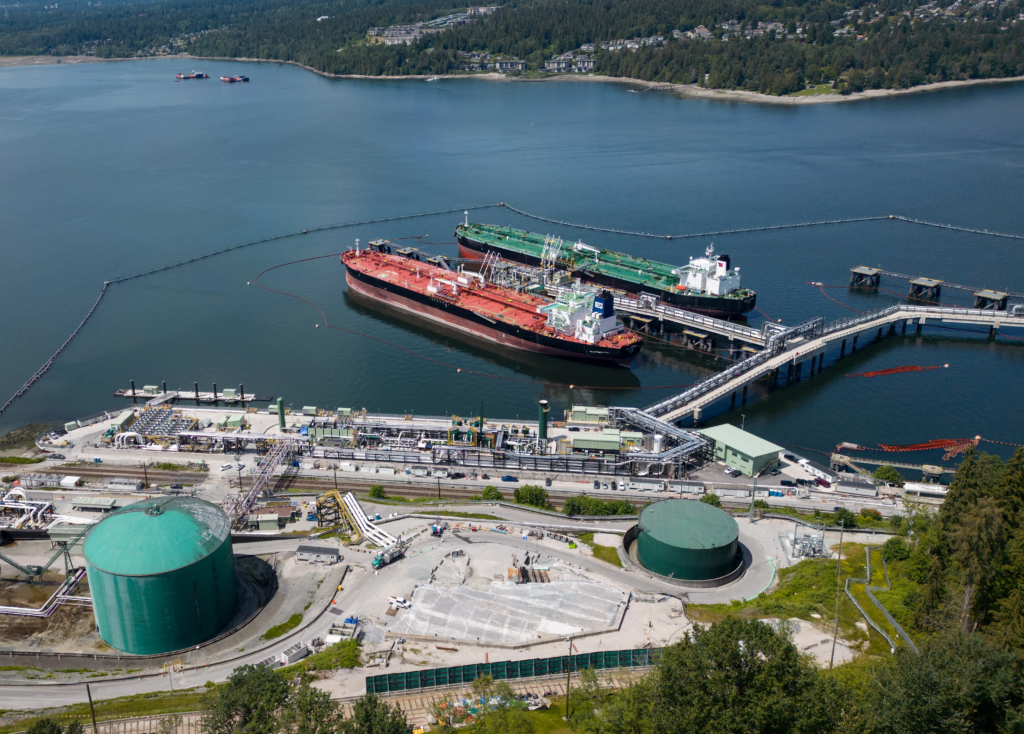
His first order of business should be to take on Bill C-48, the Oil Tanker Moratorium Act, a.k.a the Tanker Ban. The legislation restricts oil tanker traffic along B.C.’s northern coast, effectively limiting Canada’s ability to export its resources to markets beyond the United States, and threatening to make any Pacific pipeline largely pointless.
Repealing the ban would open the door to new export terminals on B.C.’s coast, creating jobs, and attracting investment. It would also give Canadian producers access to more buyers, better prices, and new revenue for governments and local communities.
The Liberals enacted Bill C-48 in 2019, and despite his reputation for being less ideological than Justin Trudeau, Mark Carney has stuck with it, while paying lip service to energy-export diversification.
Last month the Conservatives gave him a prime opportunity to change course, when they tabled Bill C-264 in an effort to repeal the ban. The initiative was rejected by the Carney Liberals out of hand.
What does Carney actually have to gain from keeping the ban in place? Not much, beyond preserving the Trudeau-era “green” agenda, which has made Canada less affordable, less attractive to investors, and less capable of getting its resources to global markets.
Canada stretches from coast to coast to coast. Our pipeline network has enabled us to supply the U.S. market. But if Carney wants to diversify Canada’s trading relationships, he needs to make it possible to ship our energy products overseas. You can’t claim to be opening new markets while keeping the ships from reaching them.
Some argue that Carney’s willingness to approve individual pipeline and energy projects is progress. He has even decreed that Canada should be an “energy superpower!”
But consider the proposed Pacific Link pipeline. It has yet to attract serious private-sector investment, faces organized opposition, and remains a long way from construction. Investors want concrete assurance that projects will actually get built.
And even if Pacific Link does get built, what happens when the oil reaches the B.C. coast? With the tanker ban still in place, access to overseas markets remains severely restricted. A pipeline without an export route is hardly the foundation of an energy superpower.
The consequences of Ottawa’s hostility to energy investment extend well beyond the energy sector. Canadians are paying more to fill their vehicles, heat their homes, and put food on the table. By restricting access to international markets, we leave oil Canadian producers dependent on American buyers, often at a substantial discount. That hurts investment and puts downward pressure on the Canadian dollar. And because so many commodities are priced in U.S. dollars, a weaker loonie makes fuel and everyday necessities more expensive.
British Columbians have made themselves heard. They want an end to policies that constrain their economy, discourage investment, and make everyday life more expensive. Doerkson has an opportunity to deliver on that message. He should start by getting the federal Liberals to repeal the tanker ban and allow Canadian energy to reach the markets that want it.
And the rest of Canada should take note. We cannot become an energy superpower by keeping our resources in the ground, blocking the infrastructure needed to move them, or preventing tankers from reaching our shores. It’s time to abandon the net-zero policies that are strangling our economy and start putting Canadian energy, investment, and affordability first.
Recent Posts
-
WATCH: Carney's Budget Fails Canadians on Affordability
November 11, 2026 -
WATCH: B.C. Must End the Tanker Ban and Get Canada Building
November 4, 2026 -
MCTEAGUE: Ottawa’s energy failure is now on your credit card statement
November 4, 2026 -
MCTEAGUE: Carney wants to join the EU — Canadians can’t afford it
November 2, 2026 -
WATCH: Mark Carney’s Pipeline Is Going Nowhere, And He Knows It
October 28, 2026
