

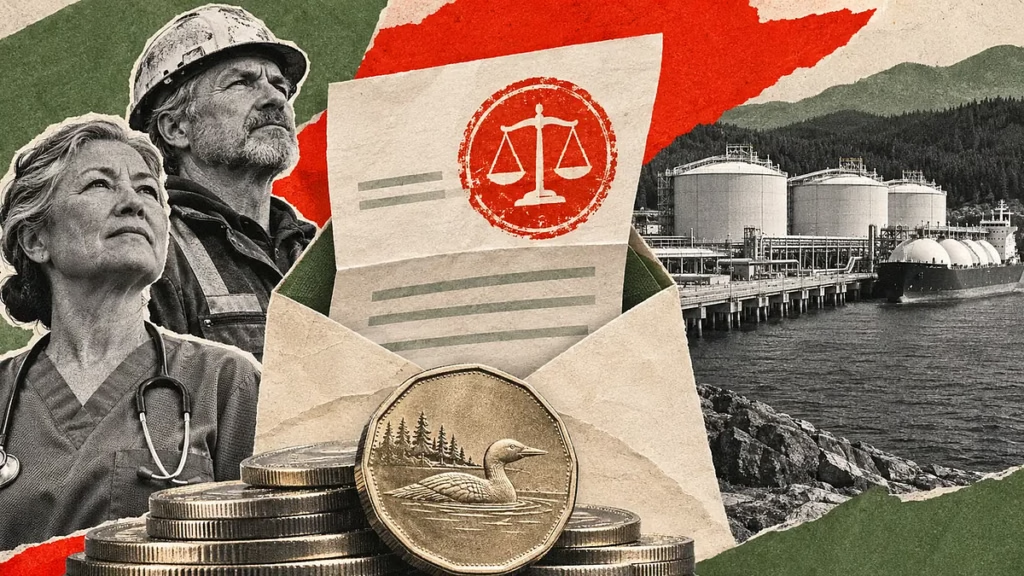
Pension funds work for Canadians, not climate activists
| By Dan McTeagueLast week, six of Canada’s largest pension funds — which together manage about $1.6 trillion in retirement assets for millions of Canadians — received quite a shock when they checked their mail. What they found were letters from a prominent law firm representing the environmentalist activist group Stand.earth, warning that investing in liquefied natural gas (LNG) projects could expose them to legal action.
This isn’t simply an environmental group expressing an opinion. This is an activist organization engaging in intimidation. It’s a tactic well known to the mafia: “That’s a nice pension fund you have there. It’d be a shame if something were to happen to it!”
And their targets aren’t just pension fund managers. They’re the retirement savings of millions of Canadians.
Pension funds exist for a reason. They are entrusted with workers’ hard-earned dollars. Their job is to invest prudently, manage risk, and generate returns for the people who depend on them. The Canada Pension Plan Investment Board’s governing legislation, for example, directs it to invest with a view to achieving a maximum rate of return without undue risk of loss.
That’s the mandate. Not advancing somebody else’s ideological agenda. Not funding a movement, environmental or otherwise. And certainly not writing off entire industries simply because activists wish they didn’t exist.
If this kind of legal intimidation works, what’s to stop other activist groups from targeting investments in mining, agriculture, manufacturing, or any other industry they happen to oppose?
LNG projects, like any other investments, should be judged on their financial merits. If the returns make sense and the risks are acceptable, why should pension managers be pressured to walk away?
Our oil and gas sector is one of the engines of the Canadian economy. It supports hundreds of thousands of jobs, generates billions in government revenues, and brings in export earnings that help sustain our economy. LNG Canada Phase 2 alone represents approximately $33 billion in investment, more than 4,000 direct construction jobs, and a doubling of the facility’s export capacity.
Moreover, energy development supports communities, creates business for Canadian suppliers, and generates tax revenue as well. A stronger resource sector also helps strengthen our dollar. That matters because a weaker loonie drives up the price of imported goods, and commodities such as oil, which are priced in US dollars.
At a time when families are struggling with the cost of living, why would we want to discourage investment in one of Canada’s most important economic assets? These are precisely the kinds of projects our pension funds should be free to consider.
Yet Stand.earth would apparently prefer that pension funds turn their backs on these opportunities. Its campaign is part of a broader effort to steer institutional investment away from fossil fuels and towards projects that align with its objectives. We’ve already seen how environmental, social, and governance (ESG) commitments and net-zero targets can distort investment decisions. Now activists want to take that pressure directly to the people managing our pensions. No thanks!
Let’s remember whose money is at stake. These aren’t Stand.earth’s retirement savings. They belong to the teachers, nurses, municipal employees, public servants, and other hardworking Canadians who have spent their careers contributing to these plans. And they’re counting on those savings to give them some financial security in retirement.
It’s one thing for Stand.earth to oppose LNG development, to lobby politicians, organize protests, and commission articles saying that fossil fuels are bad. That’s their business. It’s what their donors pay them to do.
But threatening pension fund managers with legal action because they might invest in projects that don’t fit its ideological preferences? That’s something else entirely.
Pension fund managers have a job to do: invest prudently, manage risk, and generate returns for the people whose money they oversee. They shouldn’t be making those decisions under the threat of lawsuits from activist organizations.
That money belongs to the men and women who earned it. Not the activists who want to control it.
Recent Posts
-
WATCH: Gas Prices Are Crashing — How Long Will It Last?
November 18, 2026 -
WATCH: Carney's Budget Fails Canadians on Affordability
November 11, 2026 -
All Dressed Up, Nowhere to Ship: Repeal the B.C. Tanker Ban
November 11, 2026 -
WATCH: B.C. Must End the Tanker Ban and Get Canada Building
November 4, 2026 -
MCTEAGUE: Ottawa’s energy failure is now on your credit card statement
November 4, 2026
